RV solar panels look simple. A panel, a controller, a battery. But the wrong kit wastes hundreds of dollars and leaves you hunting for a generator. Home panels and RV panels are not interchangeable. A typical home panel runs 400W at 40V and weighs 50 pounds. An RV panel often runs 100W to 200W at 12V and weighs under 25 pounds. Roof space is tight. Highway wind loads are real. If you want to understand the home side first, see our guide to the best solar panels for your home. The National Renewable Energy Laboratory (NREL) tracks solar cell efficiency and temperature effects. Those ratings matter when your panels bake on a black rubber roof. This comparison covers five proven RV solar options: rigid kits, flexible panels, and portable folding sets.
We tested and compared five popular RV solar kits. Each one uses monocrystalline cells. We looked at rated watts, real-world output, weight, charge controller type, and mounting method. Real-world output matters more than the sticker. A 200W panel might produce 140W to 160W on a hot day. That is a 20% to 30% loss. We also checked how long each kit takes to recharge a 100Ah lithium battery from 50% depth of discharge. For cost context, see our breakdown of how much solar costs. EnergySage publishes buyer guides that confirm installation labor often exceeds hardware cost for home systems. RV solar avoids that labor if you do it yourself. But you still pay for quality cells and a good controller.
Lithium iron phosphate (LiFePO4) batteries have dropped in price. A 100Ah 12V lithium battery now costs far less than it did five years ago. That makes RV solar more practical. You can run a 12V compressor fridge, lights, a laptop, and a Starlink dish on 200W of solar and 200Ah of lithium. Air conditioning is another story. A 13,500 BTU RV air conditioner draws about 1,500 running watts. It needs a 3,000W inverter and a 400Ah lithium bank to run for a few hours. That is a home-scale problem. RV solar can also qualify for the federal solar tax credit 2026 if the RV has sleeping, cooking, and living facilities.
Safety is not optional. Even 12V systems can start fires if you undersize wires or skip fuses. A 200W panel can push 12A into a short circuit. Use a 20A inline fuse at the battery. Use 10 AWG wire for runs under 20 feet. Mount roof panels with well-sealed brackets. Check torque after the first 500 miles. The EnergySage solar guide explains why rapid shutdown and disconnects matter for home systems. RV systems need a disconnect too. You want to kill power before you work on the controller. Portable panels are safer because you set them on the ground. But they can blow over. Stake them or weigh down the kickstands. Never run an inverter inside a closed compartment. Ventilation prevents overheating and carbon monoxide risk if you also carry a generator.
How Do the Top Options Compare?
| Panel/Kit | Best For | Wattage | Type | Weight | Check price |
|---|---|---|---|---|---|
| Renogy 200W Starter Kit | Best overall value | 200W | Rigid monocrystalline | 30 lbs | Check price |
| Zamp Obsidian 230W Kit | Premium US-made | 230W | Rigid monocrystalline | 26 lbs | Check price |
| Renogy 175W Flexible | Best for curved roofs | 175W | Flexible monocrystalline | 5.5 lbs | Check price |
| Jackery SolarSaga 200W | Best portable for shade | 200W | Folding monocrystalline | 17 lbs | Check price |
| EcoFlow 400W Portable | Best high-output portable | 400W | Folding monocrystalline | 35 lbs | Check price |
Wattage is rated, not real-world. Expect 70% to 80% of rated output in full sun. Flexible panels degrade faster than rigid. Portable panels require setup and can be stolen. Prices change frequently. Check current Amazon prices for each kit.
1. Renogy 200W 12V Solar Panel Starter Kit , Best overall value for roof-mounted RV solar
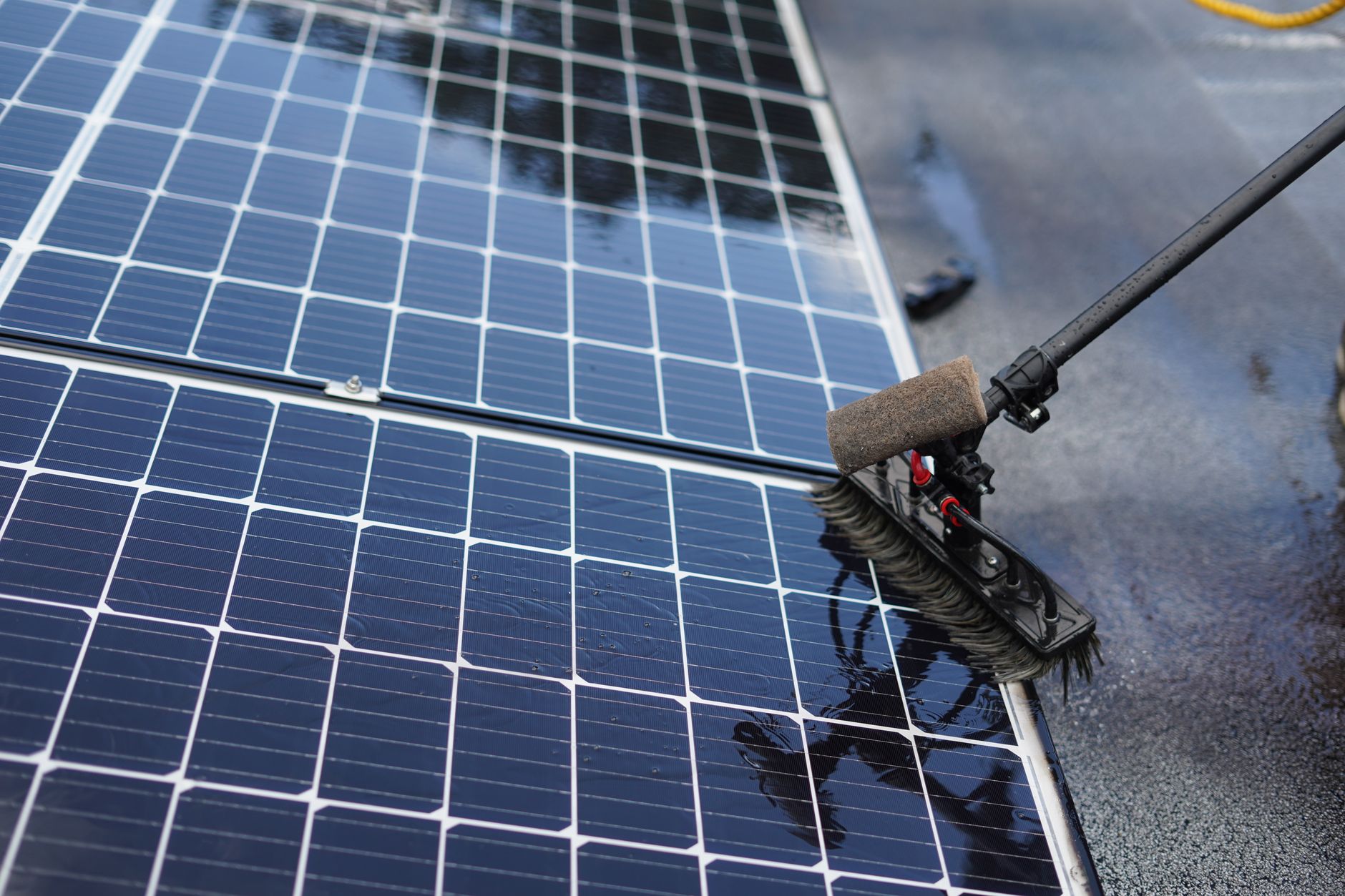
This kit includes two 100W monocrystalline panels, a 20A PWM charge controller, mounting Z-brackets, and 20 feet of cable. You add a battery and an inverter. The panels weigh about 30 pounds together. Real-world output in full sun is 10 to 12 amps. That is 140W to 160W. The PWM controller loses another 10% to 20% compared to MPPT. So your actual charge current into a 12V lithium battery lands near 9 to 10 amps. For a 100Ah battery at 50% depth of discharge, that is a 5 to 6 hour recharge in perfect sun. Cloudy days double that. The kit works with any 12V battery. You can upgrade to an MPPT controller later. Our guide to the best inverters for solar explains why pure sine wave matters for laptops and CPAP machines.
The Z-brackets are sturdy. The panels have a 25-year power output warranty. Renogy sells expansion panels, so you can add a third or fourth 100W panel later. The controller is the weak link. PWM controllers dump excess voltage as heat. They do not step down voltage the way MPPT does. If your panels are more than 10 feet from the battery, you lose more power. Keep the controller close to the battery. Use 10 AWG wire for the panel run. Check the Renogy 200W kit on Amazon for current pricing. This is the best starting point for most flat-roof RVs.
Key strengths:
- ✅ Low cost per watt compared to flexible or portable panels
- ✅ Durable anodized aluminum frame handles highway wind and tree branches
- ✅ Expandable with additional 100W panels
- ✅ Includes mounting hardware and cables
- ✅ 25-year power output warranty
- ❌ PWM controller wastes 10% to 20% of available power
- ❌ Panels are heavy at 15 pounds each
- ❌ No partial shading tolerance; one shaded cell cuts string output
Who it’s for: Budget-focused RVers with flat roofs who want a simple, reliable starter kit.
2. Zamp Solar Obsidian 230W Kit , Premium US-made roof mount with MPPT included
Zamp builds this kit in the USA. It uses a 230W monocrystalline panel with a black anodized frame. The kit includes a 30A MPPT charge controller. That controller alone is worth the upgrade. MPPT extracts 10% to 30% more power than PWM, especially in cold or cloudy conditions. The panel weighs 26 pounds. Real-world output is 16 to 18 amps into a 12V battery. A 100Ah lithium battery at 50% depth of discharge recharges in about 6 hours of full sun. The panel uses a 25-year warranty. The controller has a 5-year warranty. EnergySage notes that US-made solar equipment often costs more upfront but can have better support. This is a premium option for RVers who plan to keep their rig for a decade or more.
Installation is straightforward. Zamp includes mounting feet and a cable entry plate. The panel is slightly larger than a standard 200W panel, so measure your roof first. The MPPT controller has a Bluetooth app for monitoring. You can see real-time watts, amps, and battery state of charge. The downside is cost. You pay for the US labor and the better controller. The panel is also heavier than flexible options. If you have a curved roof, this panel will not sit flush. It needs a flat mounting area. For flat roofs and square-sided RVs, it is a buy-once, cry-once choice.
Key strengths:
- ✅ 30A MPPT controller included, boosts real-world output
- ✅ Made in the USA with a 25-year panel warranty
- ✅ Bluetooth monitoring shows live system data
- ✅ Black frame looks clean on dark roofs
- ✅ Excellent build quality and sealing
- ❌ Highest cost per watt in this comparison
- ❌ Heavy at 26 pounds, not ideal for curved roofs
- ❌ Requires a flat mounting surface
Who it’s for: RVers who want a premium, long-lasting system with the best charge controller included.
3. Renogy 175W Flexible Solar Panel , Curved RV roofs and weight-sensitive builds
Flexible panels bend up to 30 degrees. They weigh 5.5 pounds. That is one-third the weight of a rigid panel. You attach them with adhesive or self-tapping screws. No mounting brackets needed. Real-world output is 8 to 10 amps into a 12V battery. That is 100W to 120W. The panel uses monocrystalline cells with a polymer backing. It can handle slight curves on a teardrop trailer or campervan roof. NREL research shows that solar cell efficiency drops as temperature rises. Flexible panels run hotter than rigid panels because they have no air gap behind them. That heat costs you another 5% to 10% of output on a summer day. For a curved roof, the trade-off is worth it. For a flat roof, rigid panels win.
Lifespan is the main concern. Flexible panels last 5 to 10 years in full sun. Rigid panels last 25 years. The adhesive can fail. The polymer backing can crack. You cannot easily remove and reinstall them without damage. If you need to replace a roof vent, you might destroy the panel. They are also more expensive per watt. A 175W flexible panel costs more than a 200W rigid kit. But they save weight and fit where rigid panels cannot. If you are building a lightweight campervan, read our guide to the best off-grid solar kits for more weight-saving ideas. For a curved roof, this is the panel to beat.
Key strengths:
- ✅ Ultra-light at 5.5 pounds, saves payload for gear
- ✅ Bends to fit curved and irregular roofs
- ✅ Low profile, no wind noise or roof rack needed
- ✅ Easy adhesive installation, no drilling in some cases
- ✅ Good for campervans and teardrop trailers
- ❌ Shorter lifespan, 5 to 10 years in full sun
- ❌ Lower efficiency when hot because no rear airflow
- ❌ More expensive per watt than rigid panels
- ❌ Difficult to remove without damaging
Who it’s for: Owners of campervans, teardrops, or RVs with curved roofs who cannot mount rigid panels.
4. Jackery SolarSaga 200W Portable Solar Panel , Portable power stations and shaded campsites
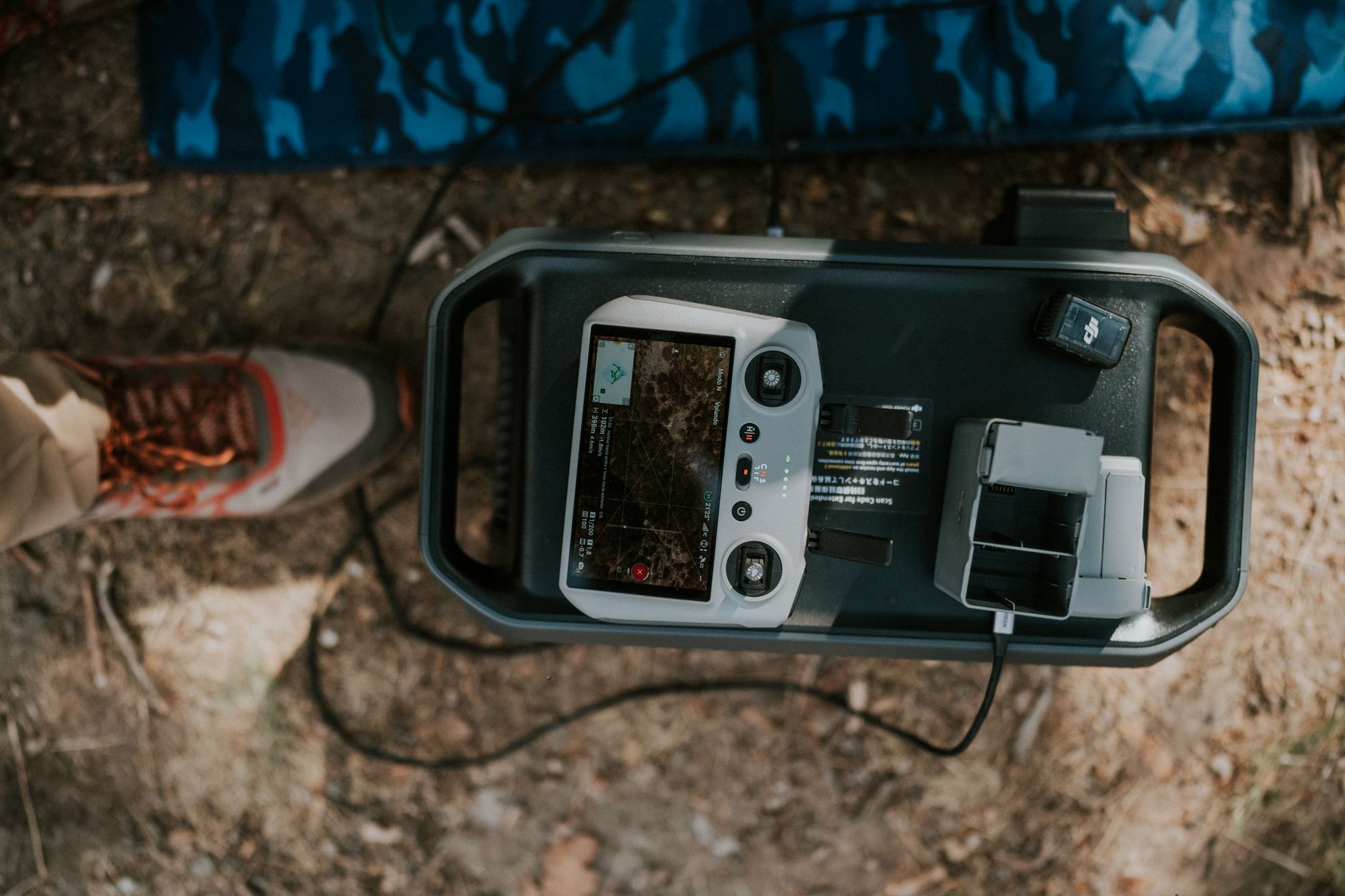
This is a folding panel. It opens to 200W and folds into a briefcase. It weighs 17 pounds. You set it on the ground with kickstands. You can move it as the sun moves. That is a huge advantage in a shady campsite. A roof panel in the shade produces almost nothing. A portable panel can be placed in a sun patch 30 feet away. The SolarSaga 200W pairs with Jackery power stations. The Jackery Explorer 1000 Pro delivers 1,000W continuous and 1,800W surge. It runs a 700W microwave for about 10 minutes or a 60W laptop for 12 hours. Charge time from 0% to 100% on the Explorer 1000 Pro is 6 to 7 hours with two SolarSaga 200W panels. One panel takes twice as long. Noise is 0 dBA. Fuel consumption is zero. Check the Jackery SolarSaga 200W on Amazon for panel and power station bundles.
The panel uses monocrystalline cells with an ETFE coating. It is weather-resistant but not waterproof. Do not leave it out in a hailstorm. The kickstands are plastic. They can break if you drop the panel. The carrying handle is convenient. The panel is bulky when folded, about the size of a large suitcase. You need space in your RV basement or truck bed. The biggest downside is theft. A portable panel left outside a campsite can walk away. Cable locks help. For weekend campers and tailgaters, the flexibility beats roof mounting. For full-timers, a roof panel plus a portable panel is the best combo.
Key strengths:
- ✅ Portable, no roof installation required
- ✅ Can be moved into sun when campsite is shaded
- ✅ Works with Jackery power stations and other solar generators
- ✅ Folds into a briefcase with a handle
- ✅ Zero noise, zero fuel, zero emissions
- ❌ Must be set up and taken down at each stop
- ❌ Can be stolen if left unattended
- ❌ Lower output than rigid panels of the same wattage
- ❌ Kickstands are fragile
Who it’s for: Weekend campers, van lifers, and emergency backup users who want plug-and-play solar.
5. EcoFlow 400W Portable Solar Panel , High-output portable solar for large power stations
This is a 400W folding panel. It has four monocrystalline sections. It weighs 35 pounds. That is heavy for a portable panel, but it produces serious power. Real-world output is 320W to 350W in full sun. That is enough to charge an EcoFlow Delta Pro (3.6kWh) in about 11 hours with one panel. Two panels cut that to 5.5 hours. The Delta Pro outputs 3,600W continuous and 7,200W surge. It can run a 1,500W RV air conditioner for about 2 hours. That is a real data point. The panel uses a shoulder strap and kickstands. It is not a backpacking panel. It is a basecamp panel. For RVers who want to run high-draw appliances without a generator, this is the highest-output portable option in this comparison.
The panel connects to EcoFlow power stations with an XT60 connector. You can also use an adapter for other brands. The ETFE surface is durable. The panel is IP67 rated for water resistance. That means it can handle rain, but not submersion. The weight is the main drawback. At 35 pounds, you need two people or a cart to move it far. The folded size is large. It takes up significant storage space. The cost per watt is higher than rigid panels, but lower than smaller portable panels. If you already own a large power station, this panel maximizes its input. Check the EcoFlow 400W solar panel on Amazon. Compare this with a whole-home battery setup in our guide to whole-home battery cost. The same lithium cells power both, just at different scales.
Key strengths:
- ✅ 400W rated output, highest in this comparison
- ✅ IP67 water resistance for rain and dust
- ✅ Works with EcoFlow Delta Pro and other high-input stations
- ✅ Adjustable kickstands for optimal angle
- ✅ Can run a 1,500W air conditioner for about 2 hours with a Delta Pro
- ❌ Heavy at 35 pounds, not easily moved by one person
- ❌ Large folded size takes up storage space
- ❌ Expensive per watt compared to rigid roof panels
- ❌ Requires a compatible power station or charge controller
Who it’s for: RVers with large power stations who need maximum portable solar input for air conditioning or high-draw appliances.
Frequently Asked Questions
How many watts of RV solar do I need?
Start with 200W for basic 12V loads like lights, a fridge, and a laptop. Add 100W for every 100Ah of lithium battery you want to recharge in a day. For air conditioning, you need 800W or more plus a large battery bank.
Can I use home solar panels on an RV?
You can, but they are heavy and large. A 400W home panel weighs 50 pounds and runs 40V. RV charge controllers usually max out at 100V input. You need an MPPT controller rated for the higher voltage. Most RVers prefer smaller 100W to 200W panels.
Do I need an MPPT charge controller for RV solar?
Yes, if you want maximum power. MPPT controllers extract 10% to 30% more energy than PWM controllers. They cost more but pay back quickly in cloudy or cold conditions.
How long does it take to charge a 100Ah lithium battery with 200W solar?
About 5 to 6 hours of full sun from 50% depth of discharge. Cloudy days double or triple that time. Real-world output is 140W to 160W, not 200W.
Are flexible solar panels worth it?
Only if you have a curved roof or a strict weight limit. They cost more, last 5 to 10 years, and run hotter than rigid panels. For flat roofs, rigid panels are a better investment.
Can I run an RV air conditioner on solar?
A 13,500 BTU air conditioner draws about 1,500 running watts. It needs a 3,000W inverter and a 400Ah lithium bank. You also need 800W to 1,200W of solar to recharge. That is a large, expensive system. Most RVers use a generator or shore power for air conditioning.
What Should You Remember?
- Match panels to battery bank: Size your solar array to recharge your battery, not to run your inverter.
- MPPT beats PWM: An MPPT controller adds 10% to 30% more power, especially in cold or cloudy weather.
- Rigid panels last longest: Expect 25 years from rigid monocrystalline panels and 5 to 10 years from flexible ones.
- Portable panels solve shade: If your campsite is shady, a folding panel you can move beats a roof panel.
- Lithium makes solar practical: LiFePO4 batteries accept high charge currents and last 3,000 to 5,000 cycles.
- Air conditioning needs a generator: Running RV AC on solar requires 800W+ of panels and a 400Ah battery bank.
- Tax credit applies: RV solar can qualify for the 30% federal solar tax credit if the RV has living facilities.
This article is for general information only. Home energy systems involve high-voltage electrical work, building codes, permits, and in some cases utility interconnection approvals , always consult a licensed electrician and your local authority before making purchase or installation decisions. Product specs, pricing, and incentives (including tax credits and net metering) change frequently; verify current details with the manufacturer and your utility.