Offshore wind is having a strange decade. Vineyard Wind 1 off Massachusetts now sends roughly 800 megawatts into the New England grid, and a single modern 15 MW turbine can produce enough annual electricity for about 5,000 homes. That is real progress on the supply side, and it matters for anyone who cares where electrons come from. It also has nothing to do with whether your garage freezer stays cold during a February ice storm. Those are two different problems wearing the same renewable label. One is a utility-scale generation question measured in gigawatt hours and interconnection queues. The other is a household resilience question measured in kilowatts, kilowatt hours, and hours of runtime. The net metering rules in your state decide what your own generation is worth, and nothing in a wind farm’s contract changes that.
We wrote this comparison for people asking a version of one question: should I wait for the grid to get cleaner, or should I buy my own hardware? To answer it, we compared five options on output, backup runtime, cost profile, and how much control a household actually gets. Costs move faster than publishing cycles, so we describe them in relative terms instead of quoting figures that go stale in a month. Where a claim depends on hard data, we pulled from the U.S. Energy Information Administration, manufacturer datasheets, and public project filings. You can see how the residential side of the math works in our breakdown of how much solar costs this year.
Scale and control rarely live in the same box. Offshore wind wins on scale, and it is not close. One 15 MW turbine produces more energy in a single rotation than a typical residential array produces in an afternoon. Home solar plus storage wins on control, and in 2026 that control is worth more than it was five years ago as rates climb and export credits tighten. The federal residential credit closed to systems placed in service after 2025, so state rebates, utility storage programs, and installer financing carry more of the weight now. Utility-scale projects get built on 20-year contracts that your household cannot sign and cannot cancel.
Timing matters too. Data center load growth is pushing utilities to build generation quickly, and offshore wind is one of the few large resources that produces at night and in winter when demand peaks. The same load growth is driving up the rates you pay. Your bill is going up either way. The only question is whether you also own something that keeps running when the feeder goes dark. In our experience specifying backup systems, the homeowners who feel best about their setup six months later are the ones who bought kilowatts they control, not the ones who waited for a cleaner mix to arrive.
How Do the Top Options Compare?
| Option | Best For | Typical Output | Backup Runtime | Where To Buy |
|---|---|---|---|---|
| Offshore Wind (utility scale) | Cleaning up the grid you already use | 700 to 800 MW per project | None for your home | No homeowner purchase |
| Community Solar Subscription | Renters and shaded roofs | Bill credits, no hardware | None | Utility program signup |
| Rooftop Solar + Home Battery | Whole-home backup plus lower bills | 5 to 12 kW array, 11.5 kW battery output | 16+ hours on essential loads | Installer quoted |
| Standalone Whole-Home Battery | Time-of-use savings and one-night backup | 11.5 kW continuous, 13.5 kWh | 12 to 18 hours | Installer quoted |
| Off-Grid Solar Kit + Hybrid Inverter | Full independence from the meter | 6 to 7.2 kW continuous, 50+ kWh expandable | 24 to 48 hours with daily solar | Check price |
Specs and figures are typical ranges drawn from manufacturer datasheets and public project filings, and exact numbers vary by model, climate, and load profile. Costs are described in relative terms on purpose because pricing changes faster than publishing cycles. Nothing in this table replaces a licensed electrician for main panel work, transfer switch installation, or battery interconnection.
1. Offshore Wind (Utility-Scale Generation) , Best for cleaning up the grid you already use, not for keeping your lights on
Offshore wind is a generation asset, not a home product. A project like Vineyard Wind 1 off Massachusetts strings together dozens of turbines on the outer continental shelf, runs the output to an onshore substation, and feeds the regional grid through a single point of interconnection. Turbines in that class hold 40 to 50 percent capacity factors, roughly double what a fixed rooftop array manages in most of the country, and they generate hardest at night and through the winter. The National Renewable Energy Laboratory tracks both the U.S. offshore resource and the cost curves behind the hardware.
Here is the part that surprises people. You cannot subscribe to a wind farm and route those electrons to your house during a blackout. When the distribution feeder faults, your meter is dead no matter how much capacity is spinning offshore. Grid power is either present or it is not, and no amount of renewable generation on the other side of an open breaker changes that. A homeowner in a town with a wind farm in its service territory has exactly the same outage exposure as a homeowner in a town with none.
Cost sits in a different universe too. Offshore wind is financed like infrastructure, on long-term power purchase agreements signed by utilities and recovered through everyone’s rates over decades. Projects take years to permit and build, and the pipeline shifts with every policy change and every canceled contract. None of that makes the technology a bad bet. It makes it slow and collective, which is the opposite of a decision you can make in your own garage this spring.
If your goal is a cleaner grid at the lowest cost per megawatt hour, offshore wind belongs in the conversation. If your goal is a house that keeps running when the feeder opens, it does not.
Key strengths:
- ✅ Generates hardest at night and in winter, the hours when solar-heavy grids need help most.
- ✅ Capacity factors of 40 to 50 percent, about double a typical rooftop array.
- ✅ Occupies almost no land, which sidesteps the siting fights that stall onshore projects.
- ✅ Delivers hundreds of megawatts per project, a scale no residential system can touch.
- ✅ Locks in long-term generation contracts that shield ratepayers from fuel price spikes.
- ❌ Provides zero backup power to your home during an outage.
- ❌ Timelines run in years, and the cost is recovered through everyone’s utility rates.
- ❌ You control none of the schedule, none of the eventual price, and none of the project’s survival.
Who it’s for: Support it as a ratepayer and a voter, not as a homeowner trying to keep the freezer cold.
2. Community Solar Subscription , Best for renters and shaded roofs that still want clean power credits
Community solar is the only option on this list you can join without owning a roof. You sign up for a share of a local solar farm, the utility applies a credit to your bill for the energy that share generates, and you pay the operator, usually at a discount to the credit. Shares are sized to cover most or all of a household’s annual usage. There are no panels, no permits, no electrician, and no ladder.
What a subscription does not do is keep anything running when the grid fails. It is an accounting arrangement on your utility bill. During an outage you get the same dark house as your neighbor, and the credit does not follow you if you move to a different utility territory. Savings are modest and program-dependent, and many utilities give low-income customers first access before opening general enrollment.
For a renter, a shaded lot, or anyone in an apartment building, community solar is a sensible way to lower the carbon intensity of the power you buy while shaving something off the bill. Whether that shows up as a meaningful reduction depends on your usage and your program’s discount rate. Pair it with a small portable power station for fridge and phone duty, and you have handled generation and resilience separately, which is often cheaper than trying to solve both with one purchase.
Key strengths:
- ✅ No roof, no installation, and no upfront hardware cost.
- ✅ Usually delivers a bill credit below the retail rate you would otherwise pay.
- ✅ Month-to-month in most programs, so moving is not a disaster.
- ✅ Lets renters and condo owners participate without landlord approval.
- ✅ Adds clean generation to the grid without any wiring on your property.
- ❌ Provides no backup power of any kind.
- ❌ Savings vary widely by program and can be small.
- ❌ Available only in states and utility territories that run a program.
Who it’s for: Renters, shaded properties, and anyone who wants cleaner power without installing hardware.
3. Rooftop Solar With a Home Battery , Best overall for whole-home backup plus long-term savings

This is the combination most homeowners actually want. An array of 20 to 30 panels, an inverter, and a wall-mounted battery that islands your house from the grid the moment voltage drops. Size the array for annual usage and size the battery for your worst night, not your average one. A modern unit with 13.5 kWh of usable capacity and 11.5 kW of continuous output carries a normal home’s essential circuits, refrigerator, furnace blower, internet, lights, and a few outlets, for 16 hours or more if the average draw sits near 800 watts. Push the average to 1,800 watts with a space heater running, and that same battery is done in about seven hours.
Solar is what turns a one-night solution into a multi-day one. An 8 kW array on a decent southern roof produces enough on a clear day to refill a 13.5 kWh battery and run the house at the same time. Add a second battery and you are into two or three days without touching a fuel can.
None of this is a weekend project. The battery needs a UL 9540 listing, the system needs rapid shutdown, a properly rated disconnect, and a backup panel that isolates the circuits you want to keep alive. Most jurisdictions require an electrical permit and an inspection, and NFPA 855 sets spacing rules for lithium storage inside a home. EnergySage publishes homeowner guides that walk through the permits, the equipment standards, and the exact questions to ask an installer before you sign. Ask about the listing mark on every piece of equipment, and ask who pulls the permit.
Sizing decisions happen before the first box is mounted. A well pump can pull 2,000 watts running and 4,000 watts at startup, and a heat pump compressor can surge higher. If those loads stay on the backup panel, one battery may not be enough. Our guide to how to size a home battery covers the load-by-load math, and our roundup of the best solar panels for home covers what is worth putting on the roof.
Key strengths:
- ✅ Carries essential circuits for 16 hours or more on a single 13.5 kWh battery.
- ✅ Solar recharges the battery every day, so an outage does not end when the battery empties.
- ✅ Silent operation with no fuel, no exhaust, and no carbon monoxide risk.
- ✅ Cuts the monthly bill every month, not just during outages.
- ✅ State and utility storage rebates often stack on top of equipment discounts.
- ❌ Highest upfront cost of anything on this list, and it is installer-priced.
- ❌ Roof orientation, shading, and roof age all cap production.
- ❌ One battery covers one night, not a week, unless you expand capacity.
Who it’s for: Homeowners with a sunny roof who want lower bills and real outage protection in the same purchase.
4. Standalone Whole-Home Battery (No Solar) , Best for time-of-use savings and one-night outage cover without solar
A battery without solar is the quiet workhorse of home energy independence. The unit charges from the grid overnight when rates are low, then discharges through the expensive evening window. When the grid drops, it transfers to backup in under a second, fast enough that a desktop computer does not reboot. Typical residential units nameplate around 11.5 kW of continuous output and 13.5 kWh of usable capacity, which covers a normal house’s essentials for 12 to 18 hours.
Set that next to a standby generator. A 22 kW air-cooled unit burns roughly 2.5 gallons per hour at full load, runs at about 65 dBA at 23 feet, and needs a fuel supply, annual service, and a carbon monoxide detector as a backstop. The battery is silent, stores nothing flammable in your yard, and never needs an oil change. The honest trade-off is duration. A battery is a bucket. A generator with a fuel source is a tap.
Sizing comes down to two numbers: the continuous watts your backup panel needs and the kilowatt hours you want in reserve. A house with a heat pump, an EV charger, or an electric water heater will flatten a single battery quickly unless those circuits stay off the backup panel. That is a wiring decision made at install time, so decide it early. Our roundup of the best whole-home batteries compares what each unit can carry and who installs it.
Key strengths:
- ✅ Silent operation with zero emissions, safe to mount on a garage or utility room wall.
- ✅ Shaves peak-rate hours every single day, whether or not the grid fails.
- ✅ Transfers to backup in under a second, so electronics ride through the switch.
- ✅ Modular design means you add capacity later instead of replacing the first unit.
- ✅ No fuel storage, no combustion, and no carbon monoxide risk.
- ❌ Charging from the grid means a multi-day outage eventually leaves you empty.
- ❌ Large electric heating loads have to be excluded from the backup panel.
- ❌ Cost per kilowatt hour of stored energy is higher than a fueled generator for long outages.
Who it’s for: Homeowners on time-of-use rates who want quiet, automatic backup but do not want solar on the roof.
5. Off-Grid Solar Kit With a Hybrid Inverter , Best for full independence from the utility meter
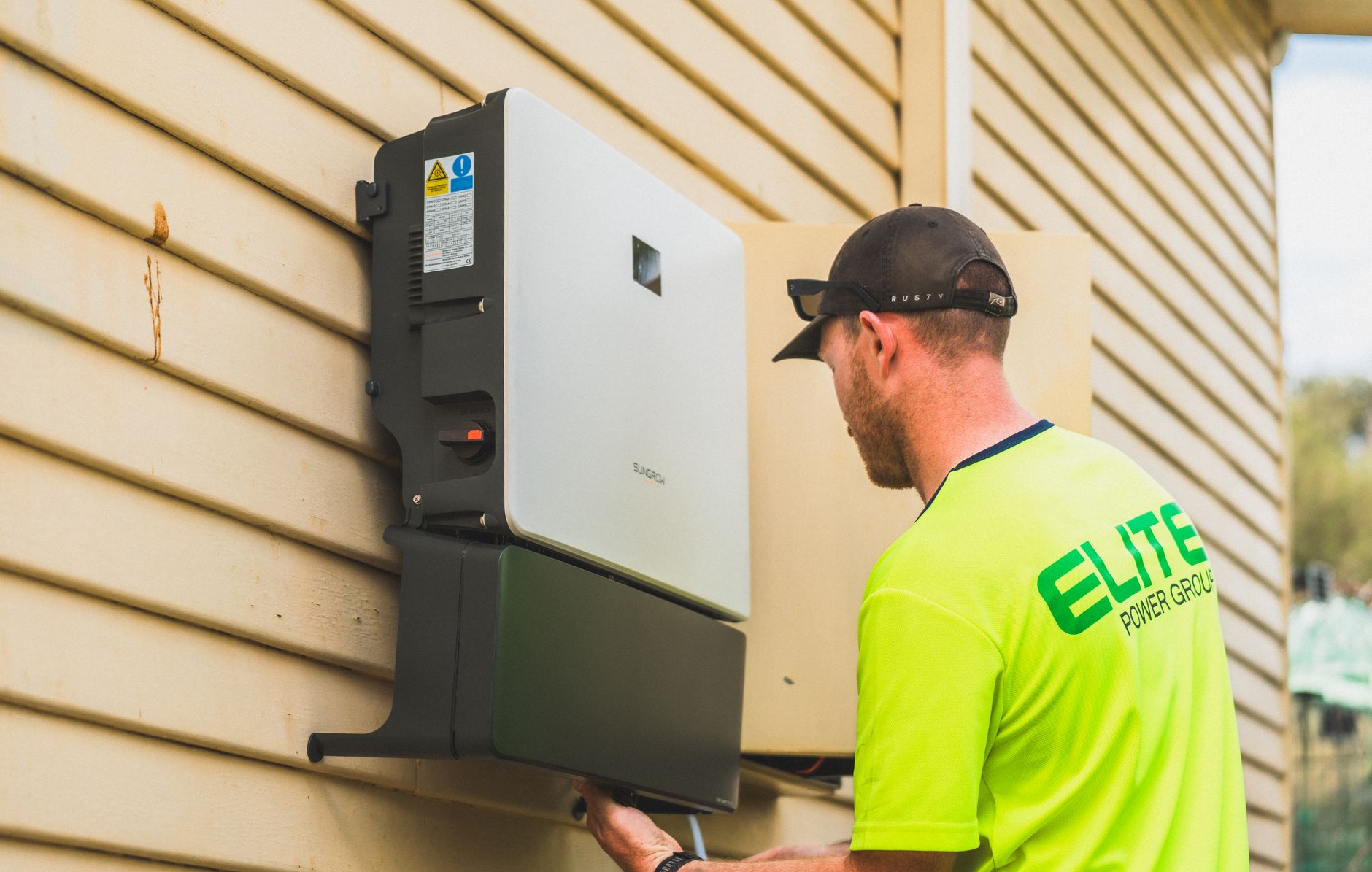
Off-grid means no meter, no monthly minimum charge, and no utility to call when something fails. The hardware looks like a scaled-up version of a rooftop system: a larger array, a battery bank sized for the worst week of the year, and a hybrid inverter that manages solar, battery, generator, and grid inputs at once. That inverter is the piece that decides which source charges the bank and which source feeds the house at any given moment.
Portable and semi-portable kits have gotten genuinely capable. The Check the EcoFlow Delta Pro Ultra on Amazon delivers about 7.2 kW of continuous AC output at 240 volts and stacks into a bank measured in tens of kilowatt hours. The Check the Anker SOLIX F3800 on Amazon puts out 6,000 watts and expands past 50 kWh with add-on batteries. Those are whole-home panel numbers, not camping gadget numbers, and both units can move with you if you relocate.
Off-grid is expensive and unforgiving. Winter production drops, batteries lose usable capacity in the cold, and every load decision has a consequence you feel immediately. You size the array 30 to 50 percent larger than a grid-tied system serving the same loads because you are refilling a battery, not offsetting a meter. If a grid connection exists, keeping it as a rarely used backup source costs far less than oversizing the array to cover a December.
Start with a year of load data and design for December. Our how to go off grid guide covers the sequencing, and it is worth reading before you buy a single panel or a single battery module.
Key strengths:
- ✅ No utility bill, no rate increases, and no outage exposure at all.
- ✅ Hybrid inverters accept solar, battery, generator, and grid inputs on one chassis.
- ✅ Scales from a cabin to a full house if you size the bank for winter.
- ✅ Runs indefinitely in summer with good sun and adequate array capacity.
- ✅ Portable kits can move with you and double as emergency backup before the build is complete.
- ❌ Two to three times the hardware cost of a grid-tied system serving the same loads.
- ❌ Winter sun and cold battery temperatures force rationing or generator use.
- ❌ Maintenance and daily load management become your job permanently.
Who it’s for: Remote properties with no practical utility connection, or homeowners who want zero dependence on a meter.
How to Pay for Home Energy Independence in 2026
The federal residential clean energy credit closed to systems placed in service after 2025, so the incentive stack in 2026 is mostly state, local, and utility. Several states still run storage rebates, a number of utilities pay a per kilowatt hour incentive for battery capacity, and some property tax exemptions survived the policy changes. Check those programs before you sign anything, because a rebate can disappear between the quote and the install date.
Financing splits into three practical paths. Cash purchases deliver the best lifetime return but tie up capital. Solar loans spread the cost across a term that usually runs shorter than the equipment warranty. Home equity financing can work if the rate beats what an installer’s lending partner offers. Leases and power purchase agreements lower the upfront number but hand the tax attributes and most of the long-term value to the third party.
Whatever you choose, phase the work. A backup panel and a transfer solution come first because they define what the system can actually carry. Solar and storage capacity come second, once you know what your house draws on a bad night.
Frequently Asked Questions
Can offshore wind power my house during a blackout?
No. Offshore wind feeds the transmission grid, and your home still depends on a working distribution feeder. When that feeder is out, your meter is dead no matter how much capacity is spinning offshore.
How long will a 13.5 kWh home battery run my house?
Roughly 16 hours if your essential loads average about 800 watts. Push the average to 1,800 watts with a space heater or a well pump cycling and expect closer to seven hours. The load list decides the runtime.
Do I need an electrician to install a home battery?
Yes for anything tied to your main panel, transfer equipment, or a backup subpanel. Battery interconnection involves line voltage, permit requirements, and inspection. A licensed electrician or certified installer should pull the permit.
Can a community solar subscription replace rooftop solar?
It replaces the generation part of the equation, not the backup part. It lowers your bill and your carbon footprint, but it provides no power during an outage. Many households pair a subscription with a small power station for the essentials.
Is home solar and a battery cheaper than buying grid power?
Over a long horizon, usually yes in states with decent rates and strong net metering. Payback depends on your rate, your roof, and how much usage the array covers. Storage adds cost and adds outage value at the same time.
What is the biggest mistake people make sizing an off-grid system?
Sizing it for July. Off-grid arrays should be designed around December production and battery capacity at winter temperatures, which drives the array 30 to 50 percent larger than a comparable grid-tied system.
What Should You Remember?
- Backup power comes from hardware on your property. Offshore wind cleans up the grid, but it cannot run your fridge during an outage.
- A 13.5 kWh battery carries essentials for about 16 hours at an 800 watt average load, and far less if heavy loads stay on the backup panel.
- Solar is what makes storage a multi-day solution. Without it, a battery is a one-night bucket that refills from the grid.
- Community solar fits renters and shaded roofs, but it is a bill credit, not a backup system.
- Off-grid costs two to three times a grid-tied system serving the same loads, mostly because you design for December, not July.
- Permits and listings are not optional. UL 9540 batteries, rapid shutdown, and an inspection keep the system legal and insurable.
- Design the backup panel before you buy anything. Which circuits stay live matters more than the brand printed on the box.
This article is for general information only. Home energy systems involve high-voltage electrical work, building codes, permits, and in some cases utility interconnection approvals , always consult a licensed electrician and your local authority before making purchase or installation decisions. Product specs, pricing, and incentives (including tax credits and net metering) change frequently; verify current details with the manufacturer and your utility.