Small wind turbines have a physics problem that no spec sheet can hide. Available power climbs with the cube of wind speed and with the square of rotor swept area. Double the wind speed and you get eight times the energy. Cut the rotor diameter in half and you lose three quarters of your capture area. That single rule explains why a 6 kW turbine on a 100-foot tower in rural Kansas outproduces a rooftop unit in a subdivision by a factor of ten. If your average wind sits at 8 mph, a turbine will spin, look impressive, and still lose to a modest solar array. If leaving the grid behind is the actual goal, start with our off-grid planning guide before you buy hardware.
I evaluated these five options the way a backup installer would, not the way a catalog would. Rated watts got checked against the wind speed they were measured at, because a 1,600 W claim at 30 mph means nothing in a 12 mph backyard. I looked at cut-in speed, rotor diameter, tower height, published noise in dBA, and what the machine actually does on a real site over a full year. Federal researchers at the National Renewable Energy Laboratory have measured building-mounted and small turbines for decades, and their field data is blunt: rooftop wind rarely performs the way the marketing brochure suggests.
Three changes made wind worth a second look for homeowners. Battery prices fell far enough that storing a gust of wind overnight is now practical. Utility export rates tightened under new net metering rules, which pushed homeowners toward self-consumption instead of selling power back. And the federal solar tax credit covers small wind turbines too, as long as the equipment meets performance and safety standards. Wind is no longer a novelty generator sitting on a pole. It is a legitimate second source on a hybrid system.
Safety and code are where most DIY wind projects fall apart. The National Electrical Code covers small wind systems in Article 694, which governs turbine disconnects, grounding, conductor sizing, and tower wiring. Any grid-tied machine needs a UL 1741 listed inverter plus a utility interconnection agreement. Add a building permit, a zoning variance for tower height, and proof of liability insurance in some counties. None of this is optional, and none of it is a job for a homeowner with a ladder and a YouTube tab open. Hire a licensed electrician for the wiring and a tower crew for the steel.
How Do the Top Options Compare?
| System | Best For | Rated Output | Cut-In Wind | Noise | Check Price |
|---|---|---|---|---|---|
| Bergey Excel 6 | Rural grid-tied homes with steady wind | 6,000 W at 24.6 mph | 5.6 mph | 45 to 55 dBA at 100 ft | Check price |
| Primus Wind Power Air 40 | Off-grid cabins topping off a battery bank | 160 W at 28 mph | 7.8 mph | 50 to 60 dBA near the hub | Check price |
| Missouri Wind and Solar Freedom II PMG | DIY hybrid tower builds on a budget | 1,600 W peak claim | 6 to 7 mph | 50 to 60 dBA near the hub | Check price |
| IceWind CW1000 Vertical Axis | Urban rooftops with tight space and strict height limits | 1,000 W at 27 mph | 5 to 6 mph | 40 to 50 dBA at 30 ft | Check price |
| Hybrid Wind + Solar + Battery | Whole-home backup with seasonal diversity | Turbine plus 11.5 kW battery inverter output | Not applicable | Turbine dependent | Check price |
Rated output numbers come from published manufacturer specs measured at the wind speeds shown, not at typical backyard wind speeds. Real annual production depends heavily on tower height, site exposure, and how often your location actually sees those speeds. Confirm utility interconnection requirements and local zoning before ordering equipment.
1. Bergey Excel 6 , Best for rural grid-tied homes with at least a 10 mph average wind resource

The Bergey Excel 6 is about as close as residential wind gets to a standard. It is rated at 6,000 watts at 24.6 mph (11 m/s), spins up at a cut-in speed of 5.6 mph, and swings a 21.3-foot rotor on towers ranging from 60 to 140 feet. At a site averaging 12 mph, annual production lands near 10,000 kWh, which is roughly what an average American home uses in a year. Read the spec carefully and you will notice the rating wind speed. Most backyards never see 24.6 mph for more than a few hours a month, so a realistic annual number matters more than the peak figure.
Tower height drives production more than any other decision. Raising a machine from 60 to 100 feet commonly adds 30 percent or more to yearly output because wind speed rises with altitude. That is a cheaper upgrade than buying a larger turbine, and it is the single reason two identical machines a mile apart can differ by thousands of kWh. Bergey’s design also uses a proven furling and yaw system with a 20-year-plus service life when it gets an annual inspection. Blades, yaw bearings, and tower bolts all get checked, and the machine gets greased.
Noise is the question every neighbor asks first. Published figures for this class land around 45 to 55 dBA at 100 feet, comparable to a refrigerator running in the next room. Wind and nighttime are a bad combination for sound complaints because background noise drops after dark while blade whoosh keeps going. Most zoning codes require setbacks of one to two times tower height, so a 100-foot tower usually needs 100 to 200 feet of clear space. If your lot is under an acre, plan on a fight.
Grid interconnection follows the same path as solar. You need a UL 1741 listed inverter, a lockable disconnect, an electrical permit, and a signed agreement with your utility. Under many net metering programs, exported wind power earns a credit at the retail rate, though a growing number of utilities now pay a lower avoided-cost rate instead. Budget per watt runs several times what solar costs, so this machine earns its place only on genuinely windy rural land with room for steel. Maintenance is not optional. Skip the annual service and you will replace a bearing or a blade set within a decade.
Key strengths:
- ✅ Real annual production of roughly 10,000 kWh at a 12 mph site, enough to cover a full-size home
- ✅ Proven 20-year-plus design life with a well-documented service history in rural installations
- ✅ Quieter than a standby generator at 45 to 55 dBA measured 100 feet from the tower
- ✅ Qualifies for the federal clean energy tax credit when installed on a primary residence
- ✅ Parts, controllers, and inverter options are widely stocked by U.S. wind dealers
- ❌ Costs several times more per installed watt than rooftop solar, before tower and foundation work
- ❌ Needs a 10 mph or better average wind resource, which rules out most suburban lots
- ❌ Requires a building permit, a tower foundation, and setback clearance from property lines
Who it’s for: Rural homeowners on five or more acres with a measured annual average wind speed of 10 mph or higher who want a long-life grid-tied machine.
2. Primus Wind Power Air 40 , Best for off-grid cabins topping off a battery bank

The Air 40 is a 160-watt micro turbine rated at 28 mph with a cut-in speed of 7.8 mph and a 46-inch rotor. The whole generator head weighs about 13 pounds, which tells you the scale of the machine. It uses a three-phase brushless permanent magnet alternator, so there are no brushes to replace and no gearbox to service. The Air 40 will not carry a house. It will keep a small battery bank topped off during a cloudy week when your panels are producing almost nothing, and that is a genuinely useful job.
Run the math before you buy. At rated 160 watts for eight straight hours, you add about 1.3 kWh to a battery. Real wind is not steady, so a week of decent gusts at a cabin may deliver 5 to 8 kWh total, spread across days. Compare that to a 13.5 kWh home battery and the scale becomes obvious. This is a trickle charger with blades, not a power plant, and anyone who sells it as whole-home backup is overselling it.
Installation has one requirement that trips up first-timers. Micro turbines cannot just disconnect from a full battery. The charge controller has to divert excess power to a dump load, usually a resistive heater element, or the turbine freewheels and burns itself out. Pair it with a proper diversion controller sized to the turbine’s peak output. Noise near the hub climbs into the 50 to 60 dBA range in a hard gust, and vibration travels through pole mounts, so isolate the mount from any sleeping space.
For a cabin, the smart play is combining this turbine with an array sized for your winter loads. Our guide to off-grid solar kits covers how to match panel wattage, charge controller amperage, and battery capacity so both sources land on the same bank without fighting each other. Set the turbine on a 30-foot guyed pole in clean air, keep it away from rooflines and trees, and it will quietly cover the loads your panels miss from November through February.
Key strengths:
- ✅ Brushless three-phase alternator with no brushes or gearbox to service
- ✅ Light 13-pound head that one person can raise on a modest pole
- ✅ Produces power at night and in winter storms when solar output collapses
- ✅ Low cut-in speed of 7.8 mph means it starts working in ordinary breezes
- ✅ Widely supported with replacement blades, hubs, and controllers available
- ❌ Rated 160 watts, so a full week of good wind may add only 5 to 8 kWh
- ❌ Requires a diversion load controller and dump load to avoid overspeed damage
- ❌ Audible blade noise gets noticeable within 50 feet during strong gusts
Who it’s for: Cabin and tiny-home owners with a small battery bank who want a winter and overnight supplement to an existing solar array.
3. Missouri Wind and Solar Freedom II PMG , Best for DIY hybrid tower builds on a tight budget
The Freedom II PMG is a direct-drive permanent magnet generator sold as a kit with blades, hub, charge controller, and sometimes a tower. Advertised peak output is around 1,600 watts, and the machine claims a cut-in speed around 6 to 7 mph. Direct drive means no gearbox and fewer moving parts, which suits a homeowner who wants to do the tower assembly and lifting themselves. The vendor sells matching dump loads, rectifiers, and wire kits, so the component list is straightforward.
Take the peak number with salt. A 1,600 W claim is typically measured in a near-gale at 25 to 30 mph. In an ordinary 12 mph wind, expect 200 to 400 watts from a machine in this class, and often less. That is not a knock on the product specifically. It is how small wind ratings work across the entire market. The honest way to compare units is to look at rotor diameter first, since swept area sets the ceiling on what any turbine can capture, then look at the wind speed attached to the rating.
Where this kit shines is flexibility. It works with a variety of hybrid charge controllers and can feed a 24, 48, or higher voltage bank depending on configuration. That makes it a reasonable fit for a homeowner building a system in stages, adding the turbine one season and more battery the next. Assembly quality matters more than brand here, because a loose blade bolt or an unbalanced hub will destroy bearings quickly. Use a torque wrench and check every fastener twice.
Code and insurance deserve a hard look before you climb. Guyed towers need proper anchors and cable tension, and many homeowners policies require a rider for a tower over a certain height. Electrical work still falls under NEC Article 694 and needs a permit and inspection in most jurisdictions. If you are not comfortable running conduit, sizing conductors for voltage drop, and landing a DC circuit on a charge controller, hire an electrician for the wiring and stay on the tower side of the job.
Key strengths:
- ✅ Direct-drive permanent magnet generator with no gearbox to fail
- ✅ Kit pricing sits below comparable branded turbines, which lowers the entry cost
- ✅ Compatible with many hybrid charge controllers and battery voltages
- ✅ Ships as a complete package including blades, hub, and controller options
- ✅ Repairable design with individual blades and bearings sold separately
- ❌ Peak output claims are measured at wind speeds most sites rarely see
- ❌ Build quality depends heavily on the installer’s assembly and balancing work
- ❌ Fewer independent third-party performance tests than the major U.S. brands
Who it’s for: Hands-on homeowners with tower-building experience who want a lower-cost starter machine and plan to expand the system over time.
4. IceWind CW1000 Vertical Axis , Best for urban rooftops where height limits and appearance matter most
The IceWind CW1000 is a helical vertical axis turbine rated around 1,000 watts at roughly 27 mph, with a claimed cut-in speed near 5 to 6 mph. It spins on a vertical shaft instead of a horizontal one, so it accepts wind from any direction without yawing. That design makes it compact, visually unusual, and easy to mount on a short mast. For a homeowner with a strict height cap or a neighborhood association watching the skyline, the low profile is the entire pitch.
The honest part is harder to write. Building-mounted wind has a bad track record in field testing because rooftop wind is turbulent, gusty, and much slower than the open-air resource a tower would see. Annual average wind at 30 feet in a suburban area often lands between 7 and 9 mph, while the turbine’s rating wind speed is three times higher. Output falls with the cube of that gap, so the real number can land at a small fraction of the label. Federal testing of building-mounted turbines has repeatedly found they underperform their ratings by wide margins.
Vibration is the second problem. A spinning vertical axis machine transmits low-frequency vibration straight into roof framing, and that hum reaches bedrooms in a way that blade whoosh on a tower does not. Roof loading, flashing penetrations, and warranty language are all real concerns. Bolt a turbine to a shingled roof and you may void the roof warranty. Ground or pole mounting avoids most of these issues, but then you lose the compact-footprint advantage that made the design attractive.
There is a legitimate use case. A vertical axis unit can trickle charge a small battery for a shed, a gate opener, or remote monitoring equipment, and it does that without a tall tower or a permit fight. It is not a whole-home backup source, and no honest installer will tell you otherwise. If your goal is cutting a real electric bill, this is not the tool. A modest solar array and a battery will outperform it in nearly every suburban location.
Key strengths:
- ✅ Compact footprint works where a tall guyed tower is not allowed
- ✅ Vertical axis design captures wind from any direction without yawing
- ✅ Low claimed cut-in speed starts rotation in light suburban breezes
- ✅ Quieter at distance than horizontal turbines of similar rated output
- ✅ Visually distinctive, which helps with some design review boards
- ❌ Field testing shows building-mounted turbines rarely reach their rated output
- ❌ Vibration transfers into roof framing and can void roofing warranties
- ❌ Rated wind speed of 27 mph is far above typical suburban rooftop conditions
Who it’s for: Homeowners in urban or HOA-restricted areas who need a compact trickle-charge source and accept modest output as the tradeoff.
5. Hybrid Wind + Solar + Battery , Best for whole-home backup with seasonal source diversity
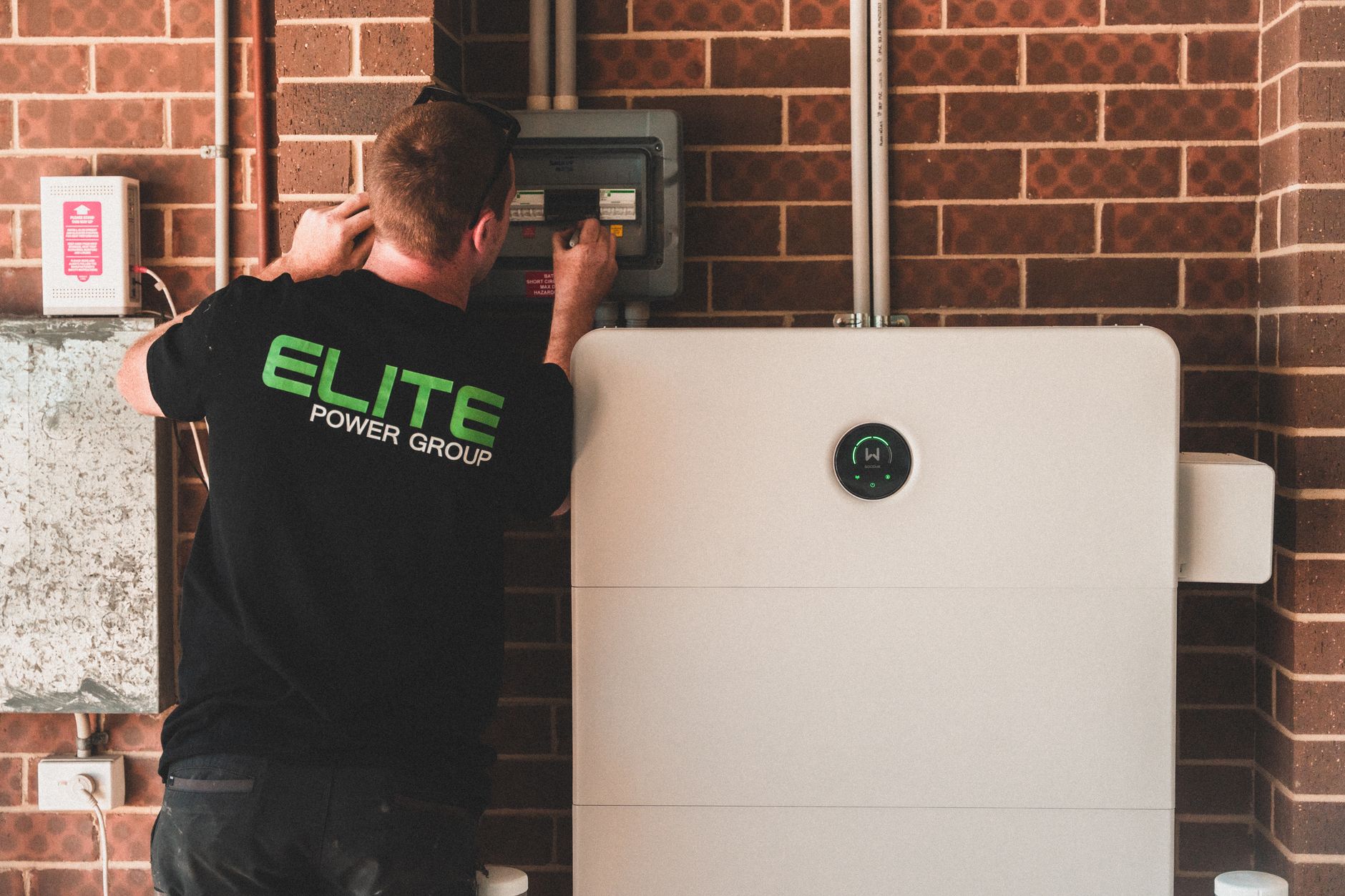
This is the setup that actually delivers home energy independence, and it does not depend on one turbine carrying the whole house. A small turbine feeds a charge controller, the solar array feeds an MPPT controller, and both land on one battery bank. The battery runs the house through a hybrid inverter, and the grid or a generator acts as the last line of defense. Wind covers winter nights and storm weeks when solar sags. Solar covers the long calm stretches when the turbine sits still. Neither source has to be oversized.
The battery is where the numbers get concrete. A Tesla Powerwall 3 delivers 13.5 kWh of usable storage with 11.5 kW of continuous output, enough to run a typical home’s essential circuits and a heat pump simultaneously. A FranklinWH aPower holds 13.6 kWh with 5 kW continuous and 10 kW surge, and that surge rating is what starts a well pump or an air conditioner compressor without a brownout. Run a 1,000-watt average load on a 13.5 kWh battery and you get roughly 13 hours of runtime, longer if you shed the big loads at night.
Wind’s role in this system is modest but well matched to the gaps. A 1 kW turbine running at 300 watts for ten hours adds 3 kWh, which covers a refrigerator, lights, internet, and a furnace blower for a day. Multiply that across a windy winter month and the turbine contributes meaningfully while the solar array is buried in snow. That complementary profile, not raw capacity, is the argument for adding wind at all. Wind is variable, so plan on the battery buffer and a generator or grid connection for the calm weeks.
Sizing matters more than brand here. Our guide to how to size a home battery walks through daily critical load calculations so you are not guessing. From there, compare energy storage options in our roundup of the best whole-home batteries to match inverter output to your surge loads. On the code side, battery systems fall under UL 9540 listing and NEC Article 706, turbine wiring under Article 694, and the whole installation needs a permit and utility sign-off. Do not skip those steps to save a few weeks.
Key strengths:
- ✅ Two generation sources cover each other’s weak seasons and weather patterns
- ✅ Battery inverters like the Powerwall 3 deliver 11.5 kW continuous for whole-home circuits
- ✅ Surge ratings of 10 kW on some batteries start well pumps and AC compressors
- ✅ Turbine output can be sized small because the battery absorbs variability
- ✅ Inverter, disconnect, and monitoring equipment share one integrated system
- ❌ Upfront cost is the highest of any option here once you add tower, battery, and inverter
- ❌ Requires coordinated design between turbine controller, solar MPPT, and battery inverter
- ❌ Still needs a generator or grid connection for extended calm periods in winter
Who it’s for: Homeowners with a decent wind site plus good sun who want the most resilient whole-home backup and are willing to invest in a properly engineered hybrid system.
Frequently Asked Questions
How much wind do I need for a home turbine to make sense?
Aim for an average wind speed of at least 10 mph at hub height, measured over a full year, with 12 mph or better being the real target. Below 9 mph, the economics rarely work because turbine output falls with the cube of wind speed.
Can a small wind turbine power my whole house?
Only a handful of residential turbines can, and only on large rural lots. A 5 to 10 kW machine on a tall tower at a windy site can cover the roughly 10,000 to 11,000 kWh a typical U.S. home uses each year, but production swings hard by season and weather.
Is a wind turbine louder than a backup generator?
Usually yes in a gust, no in a calm. A home standby generator runs around 65 to 75 dBA when charging, while a small turbine sits near 45 to 55 dBA at 100 feet. Close to the tower, blade whoosh during a 25 mph gust can be noticeable.
Do I need a permit and utility approval for a home wind turbine?
Yes on both counts. Zoning usually sets tower height limits and setbacks of one to two times tower height, and the electrical side needs a permit plus a utility interconnection agreement with a UL 1741 listed inverter and a visible disconnect.
Can I run a wind turbine and solar panels into the same battery bank?
Yes, and it is the most practical home setup. A hybrid charge controller or hybrid inverter accepts both sources, then the battery carries the house loads. Wind tends to produce in winter and at night, which covers solar’s weakest hours.
How long does a small wind turbine last?
A quality machine like a Bergey Excel has a design life of 20 years or more with annual service. Cheaper direct-drive units often need bearing, blade, and controller replacements within five to eight years, which eats the savings.
What Should You Remember?
- Wind speed beats turbine brand: output scales with the cube of wind speed, so a 12 mph site produces roughly eight times the energy of a 6 mph site with the same machine.
- Height is the cheapest upgrade you can make: going from a 60-foot to a 100-foot tower often adds 30 percent or more annual production for far less than a bigger turbine.
- Micro turbines are battery maintainers, not power plants: a 160 W unit running at full rated wind for eight hours adds only about 1.3 kWh to a battery bank.
- Expect 45 to 55 dBA at 100 feet: that is quieter than a standby generator at 65 to 75 dBA, but blade whoosh carries at night when neighborhood noise drops.
- Code applies to every install: NEC Article 694 covers small wind wiring, and grid-tied systems need a UL 1741 listed inverter plus a utility interconnection agreement.
- Hybrid wind plus solar plus battery wins: pairing a modest turbine with a 13.5 kWh battery gives you winter wind generation and summer solar production on one system.
- Budget per watt, not per unit: small wind typically costs several times more per installed watt than rooftop solar, so it earns its place only on genuinely windy land.
This article is for general information only. Home energy systems involve high-voltage electrical work, building codes, permits, and in some cases utility interconnection approvals , always consult a licensed electrician and your local authority before making purchase or installation decisions. Product specs, pricing, and incentives (including tax credits and net metering) change frequently; verify current details with the manufacturer and your utility.